

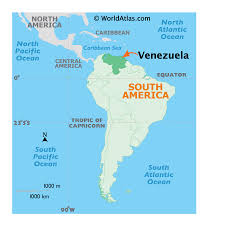
US Strikes Venezuela(2026), Captures President Nicolás Maduro: Implications for International Law, Regional Stability and India
Breaking News on January 4, 2025
In a dramatic escalation, the United States carried out large-scale military strikes on Venezuela, captured President Nicolás Maduro and his wife, and flew them to the US to face criminal charges, triggering a major international crisis and sharp global reactions.
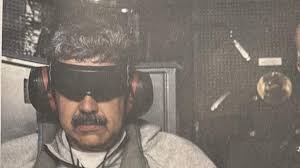
According to US President Donald Trump, American forces conducted a swift overnight operation—codenamed “Absolute Resolve”—that ended Maduro’s rule within hours. Trump announced that the US would “run Venezuela temporarily” until a “safe and proper power transition” is completed. He also shared images of Maduro blindfolded aboard a US warship, later confirming the Venezuelan leader’s arrival in New York to face indictments related to alleged drug trafficking, weapons, and conspiracy charges.
Implications for International Law, Regional Stability and India
The recent large-scale military action by the United States in Venezuela, resulting in the capture of President Nicolás Maduro and his transfer to the US for prosecution, marks a watershed moment in contemporary international relations. The episode has triggered intense global reactions and raised fundamental questions regarding sovereignty, legality of unilateral interventions, regime change, and great-power politics.
Background and Context- US Action in Venezuela
Venezuela’s prolonged crisis is rooted in structural economic vulnerabilities and political institutional decay. Excessive dependence on oil revenues, lack of economic diversification, rigid state controls, and governance failures led to hyperinflation, shortages of essential goods, and a severe humanitarian crisis. Politically, the erosion of democratic institutions following contested elections and the marginalisation of the opposition-dominated National Assembly deepened internal polarisation.
The United States has long been a central external actor, earlier pursuing regime change through economic sanctions and diplomatic isolation. However, the latest action represents a decisive escalation—from coercive diplomacy to direct military intervention—reflecting frustration with the failure of sanctions, concerns over regional instability, and strategic interests in Venezuela’s vast oil reserves.
Nature of the US Action
According to official statements, the US conducted a swift military operation aimed at removing the Maduro regime, citing allegations of drug trafficking, weapons proliferation, and democratic backsliding. The US leadership has indicated its intention to temporarily oversee Venezuela’s administration until a “safe and orderly transition” is achieved, signalling unprecedented involvement in the country’s governance and energy sector.
This move bypassed multilateral mechanisms and lacked explicit authorisation from the United Nations Security Council, prompting serious legal and normative concerns.
International Reactions and Legal Concerns
The intervention has sharply divided the international community. Russia, China, Iran, Brazil, and Cuba condemned the action as a violation of Venezuela’s sovereignty and the UN Charter. The UN Secretary-General warned that such actions set a dangerous precedent by undermining the principles of non-intervention and peaceful settlement of disputes.
Conversely, some Western countries and US allies welcomed the removal of Maduro, framing it as an opportunity for democratic transition. This divergence highlights the ongoing tension between the doctrines of sovereignty and humanitarian or democracy-based intervention in global governance.
Regional and Global Implications
Regionally, the intervention risks destabilising Latin America by intensifying political polarisation, triggering refugee flows, and encouraging militarisation of political disputes. It could also revive memories of Cold War–era interventions, weakening trust in international norms.
Globally, the episode may embolden unilateral actions by powerful states, eroding the authority of multilateral institutions. In energy markets, while Venezuela’s oil potential offers short-term optimism, sustained recovery will depend on institutional rebuilding rather than external control.
Impact on India
For India, the implications are multidimensional. As a major energy importer, any stabilisation of Venezuelan oil output could indirectly ease global supply pressures. However, India has consistently upheld principles of sovereignty, non-intervention, and peaceful dialogue. The Ministry of External Affairs’ cautious response and travel advisory reflect India’s concern for citizen safety while avoiding endorsement of regime change through force.
Strategically, the crisis underscores the importance of strategic autonomy, as India balances relations with the US, Russia, and other global powers amid growing geopolitical fragmentation.
Conclusion
The US intervention in Venezuela represents a profound challenge to the post-World War II international order based on sovereignty and multilateralism. While Venezuela’s internal governance failures are undeniable, unilateral military action risks long-term instability and normative erosion. A durable solution lies in inclusive political dialogue, humanitarian prioritisation, and multilateral engagement rather than force-driven regime change. For India and the global community, the episode reinforces the need to strengthen international law and resist the normalisation of unilateral interventions.
Current Events related to world politics relevant for all Competitive Exams
1 thought on “US Strikes Venezuela(2026), Captures President Nicolás Maduro: Implications for International Law, Regional Stability and India”